

Pharma Design is a specialist HTA consultancy providing integrated regulatory and market access support to biotechs and small pharma both in EU and the UK. Our HEOR consultants help you prepare for NICE HTA, pricing and reimbursement, and EU HTA (JCA) requirements from early development. Market access pharma consulting is no longer a step that follows regulatory approval, it should be built into your development strategy from the beginning. This will save you time and money.
At Pharma Design, we support biotech teams with pharmaceutical market access consulting, aligning regulatory and health technology assessment (HTA) requirements early on – so you can move from approval to reimbursement without unnecessary delays.
We work alongside your team to ensure your evidence, endpoints and value story are designed to meet both regulatory and customer expectations.
What Is Market Access in Pharma?
Pharmaceutical market access refers to the process of securing reimbursement and patient access after regulatory approval. This involves demonstrating not only that a product is safe and effective, but that it provides clear value compared to existing treatments.
1. Health Economics
This side focuses on the financial impacts and resource allocation of a healthcare intervention. Because healthcare budgets are finite, decision-makers must weigh the cost of a new treatment against its benefits.
Common types of health economic analyses include:
- Cost-Effectiveness Analysis (CEA): Compares the relative costs and outcomes of two or more courses of action. It looks at the cost per unit of health outcome.
- Cost-Utility Analysis (CUA): A specific type of CEA where outcomes are measured in QALYs (Quality-Adjusted Life Years). It measures both the quantity (length) and quality of life gained.
- Budget Impact Analysis (BIA): Predicts the net financial impact of introducing a new intervention into a specific healthcare system or health plan budget over a short-term horizon (usually 1 to 5 years).
- Cost-Benefit Analysis (CBA): Converts both the costs and the health outcomes into monetary values (dollars/pounds/euros) to see if the financial return outweighs the investment.
2. Outcomes Research
This side focuses on measuring the real-world effects of healthcare interventions on
patients. This goes beyond the controlled, idealised environment of a Phase III
clinical trial to look at what happens in everyday medical practice.
Outcomes are typically categorised using the ECHO model:
- Economic Outcomes: Direct medical costs (hospital stays, medication), indirect costs (loss of productivity at work), and intangible costs (pain and suffering).
- Clinical Outcomes: Medical events or endpoints, such as survival rates, stroke prevention, cure rates, or laboratory markers.
- Humanistic Outcomes: Focuses entirely on the patient’s perspective. This includes PROs (Patient-Reported Outcomes), Health-Related Quality of Life (HRQoL), patient satisfaction, and symptom burden.
Why is HEOR Crucial?
- Securing Market Access and Reimbursement: Regulatory approval (like
from the FDA or EMA) allows a drug to be sold, but it does not guarantee that insurance companies or national health services will pay for it. Health Technology Assessment (HTA) bodies, such as NICE in the UK, rely heavily on HEOR data to decide whether to place a drug on their formulary and at what price. - Pricing Strategy: HEOR helps manufacturers determine a sustainable, value-based price for breakthrough treatments. For instance, a one-time gene therapy might cost millions of dollars, but HEOR models can prove it is cost-effective if it eliminates a lifetime of expensive hospitalisations and chronic care.
- Real-World Evidence (RWE): Clinical trials often exclude patients with
multiple comorbidities or specific demographics. Outcomes research utilises
electronic health records, insurance claims databases, and registries to show
how a drug performs across a diverse, real-world population. - Informing Clinical Decisions: HEOR data helps physicians understand which treatments provide the best holistic value and quality of life improvements for their patients.
What do you need for Market Access in Pharma?
In the EU and UK, this means meeting the requirements of:
- Regulators (EMA, MHRA): safety, quality and benefit–risk
- HTA bodies (NICE, HAS, NCPE, G-BA, IQWiG): relative effectiveness and cost-effectiveness
Without alignment between the two, delays and restrictions often happen.
Why Market Access Strategy Needs to Start Earlier
Traditional development models treated regulatory approval and pharmaceutical market access as separate steps. This approach now creates risk.
With the EU HTA Regulation (HTAR) and the UK’s aligned pathway between MHRA and NICE, your clinical and evidence strategy must support both regulatory approval and HTA outcomes at the same time.
If missed, it can result in:
- Evidence gaps at submission
- Delayed reimbursement decisions
- Additional data requests or post-approval studies
We help you avoid this by building an integrated strategy from the outset.
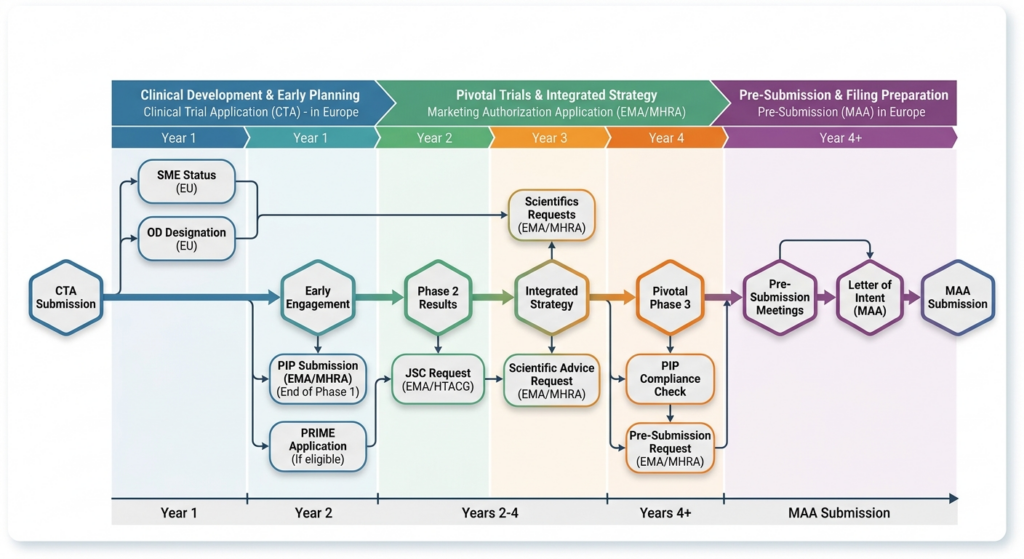
Our Pharmaceutical Market Access Consulting Approach
Integrated Regulatory and HTA strategy
We provide market access consulting that aligns your regulatory and HTA workstreams across four key areas:
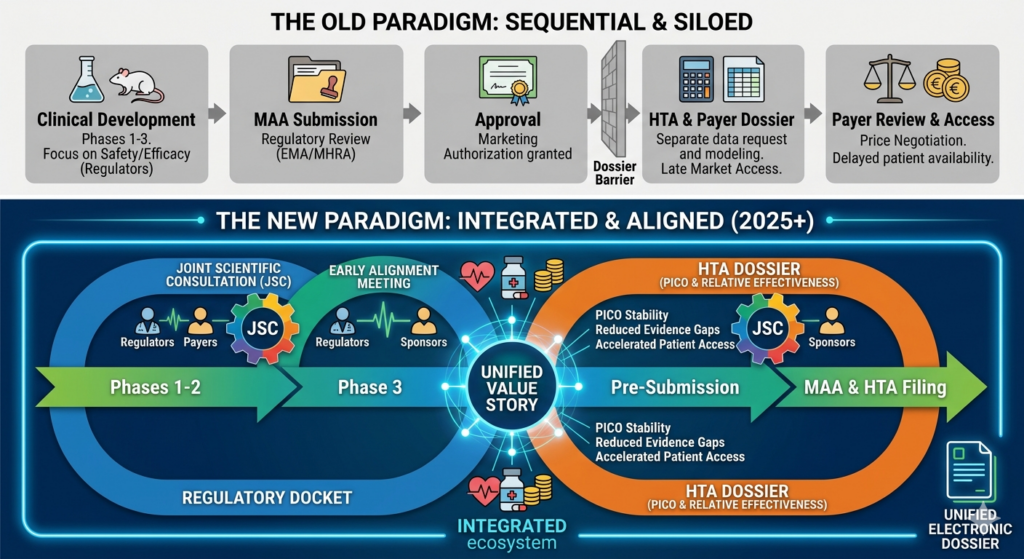
1. Early alignment of regulatory and HTA requirements
We make sure your development strategy supports both approval and reimbursement.
- Coordinated scientific advice meeting preparation across EMA, MHRA and HTA bodies
- Endpoint selection aligned with payer expectations
- Paediatric Investigation Plan (PIP) strategy designed with HTA requirements in mind
- Integration of PRIME (EU) and ILAP (UK) pathways
2. Joint scientific consultation (JSC)
We support the preparation and delivery of joint scientific consultation (JSC) and parallel scientific advice with regulators and HTA bodies.
This helps you gain early agreement on:
- Comparator selection
- Patient-reported outcomes (PROs)
- Subgroup analysis and evidence expectations

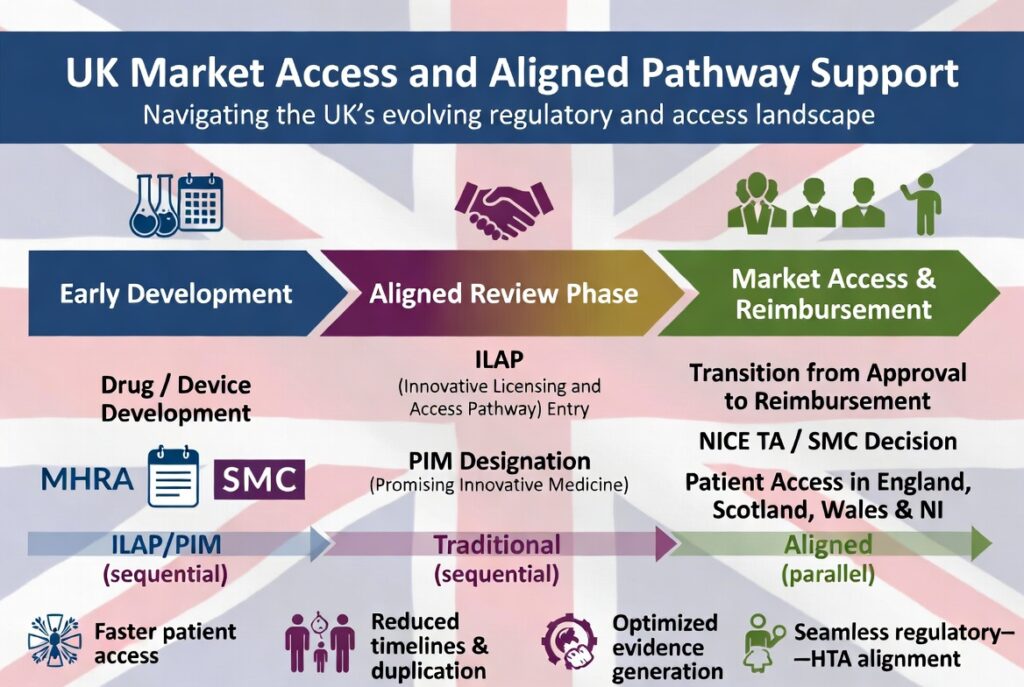
3. UK market access and aligned pathway support
We guide you through the UK’s evolving regulatory and access landscape.
- Navigating ILAP and PIM designations
- Aligning MHRA review with NICE and SMC expectations
- Supporting transition from approval to reimbursement
4. Evidence strategy and gap analysis
We assess your clinical programme to identify risks early and strengthen your HTA dossier and MAA dossier.
- Stress-testing Phase II/III data against HTA expectations
- Identifying evidence gaps before submission
- Reducing the risk of delays or additional studies


5. European legal entity setup and regulatory representation
To proceed with a Marketing Authorisation in Europe, you must establish a legal presence in the EU, UK or Switzerland and register with the relevant regulatory systems.
This is not just a regulatory requirement – it has a direct impact on cost, timelines and how you engage with agencies.
We support biotech companies with both entity setup and local regulatory representation, helping you become operational quickly and efficiently. This includes:
- Establishing your European legal entity in the EU or UK
- Registering your organisation and products with key agency portals, including:
- Supporting SME status applications where applicable
- Acting as your authorised local representative if preferred
For companies without an existing European presence, we can also act on your behalf through our own established EU and UK entities, which are already registered with regulatory agencies.
Why Pharma Design
Reducing delays and improving access outcomes
Our approach to pharmaceutical market access consulting can help you:
- Reduce time from approval to reimbursement
- Avoid duplication across regulatory and HTA dossiers
- Strengthen your value proposition for payers
- Minimise the risk of negative or restricted HTA outcomes
A practical partner for EU and UK market access
We understand the pressure small and mid-sized biotech teams face – from limited internal resources and tight timelines to high regulatory risk.
We work as an extension of your team to provide:
- Up-to-date expertise in EU HTAR and UK pathways
- Clear, actionable guidance across regulatory and HTA
- Flexible support aligned to your development stage
- A joined-up strategy from CTA through to MAA and access
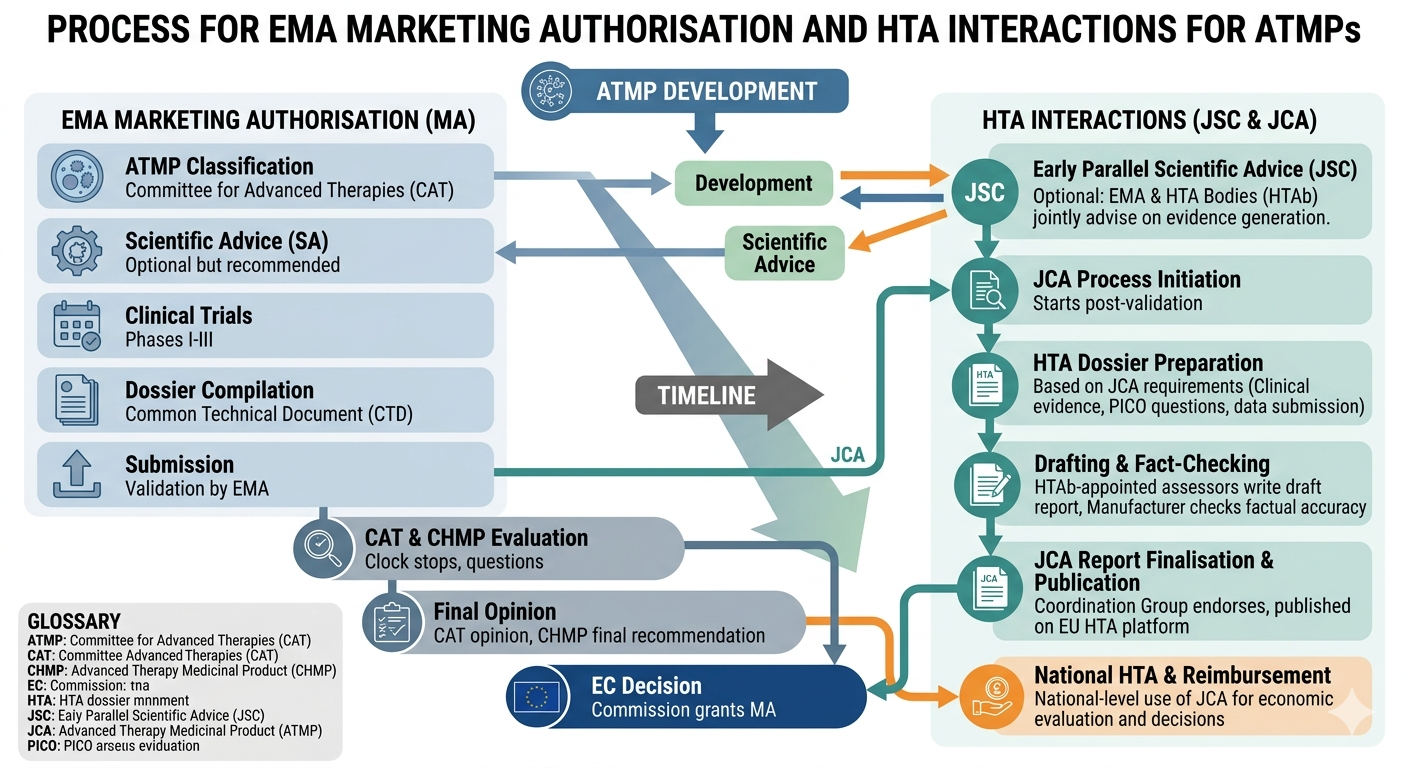
Align Your Regulatory and Market Access Strategy Early
If you’re planning clinical development, preparing for MAA, or need to strengthen your HTA strategy, Pharma Design can support your team.
Our Values
The value we bring to pharmaceutical companies falls into four main areas:
- Objective, impartial advice tailored to your needs
- Help cut your development costs
- Help reduce your time to market
- Keep your drug on the market